Your Ultimate Zhangjiajie Travel Guide — Licensed English Guides for Wulingyuan, Tianmen Mountain & More
9,516 km²
1.5 million
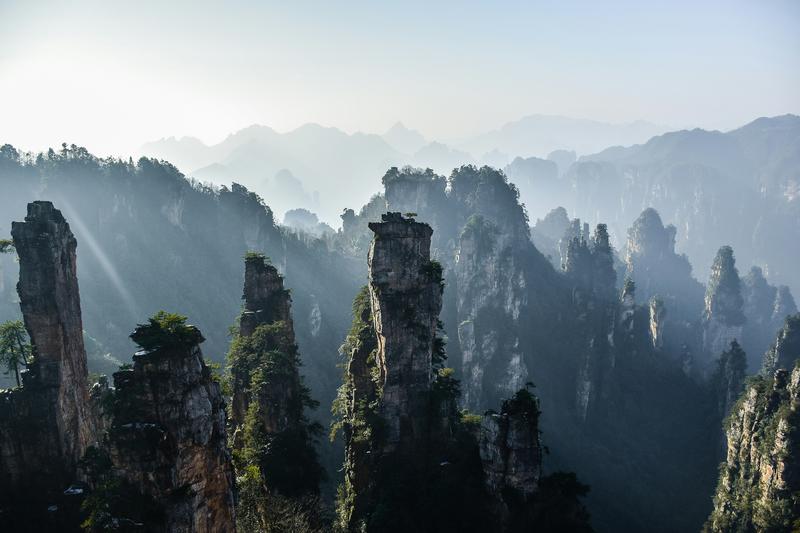
Zhangjiajie (张家界) was named after Zhang Liang, a Han Dynasty strategist who lived here in seclusion. The floating mountains inspired the movie Avatar.
7.5/10 — A mountain city where nature dominates daily life — clean air, stunning scenery, and a growing tourism economy.
Airport: Zhangjiajie Hehua (DYG) — 1 terminal, 15 min to Wulingyuan Scenic Area by taxi. Train Stations: Zhangjiajie Railway Station (city center, 40 min to National Park), Zhangjiajie West (high-speed rail, 50 min to Wulingyuan). Getting Around: Free shuttle buses inside the park; cable cars and elevators between peaks. Note: The city is small; most tourists stay in Wulingyuan district near the park entrance.
Zhangjiajie University, Jishou University Zhangjiajie campus
Wulingyuan Scenic Area, Tianzi Mountain, Yuanjiajie, Baofeng Lake, Yellow Dragon Cave, Suoxiyu Nature Reserve.
Plan your perfect Zhangjiajie trip with our seasonal guide — weather, events, and travel tips for every time of year.
Autumn (October–November) — the best season to travel to Zhangjiajie
Winter (December–February) offers the lowest prices and dramatic ice/snow scenery
Mar–May: Spring | Jun–Sep: Summer | Oct–Nov: Autumn | Dec–Feb: Winter
Discover the best of Zhangjiajie with a knowledgeable local expert who speaks fluent English.
Licensed, verified, and passionate about showing you the best of Zhangjiajie.
Licensed, experienced English-speaking guide in Zhangjiajie. Deep knowledge of local history, culture, and attractions. Fluent English with professional guiding certification. Available for half-day, full-day, and multi-day tours.
Friendly, personable local guide in Zhangjiajie. Basic English with translation app support. Perfect for shopping tours, food walks, and casual city exploration. Great value for budget-conscious travelers.
Metro, taxi, ride-hailing, train & bus — everything you need to get around Zhangjiajie easily.
No metro. City transport by bus and taxi. Tourist shuttles between attractions.
Search Bus Routes →Starts CNY 6 for 2 km, CNY 1.5/km. For Wulingyuan (30 km), take tourist bus or hire car.
Book via DiDi →Available in city. For attractions outside center, taxi or tour is best.
Download DiDi →Zhangjiajie Station (张家界站) — classic trains. Zhangjiajie West (张家界西) — HSR: to Changsha (3h), Guiyang, and major cities.
Book Train Tickets →Zhangjiajie Bus Station (张家界汽车站): buses to Fenghuang (3h), Changsha (4h), Wulingyuan (1h).
Search Bus Routes →Wulingyuan/Avatar Mountain park entry: 携程 or at park gate. Buses to Fenghuang: at station. HSR: 12306.cn.
Book on Trip.com →Zhangjiajie nightlife is modest but charming — local Hunan food culture, evening performances and dramatic Avatar Mountain illuminated at night.
Zhangjiajie's performance culture is rooted in the traditions of the Tujia and Miao minorities — folk songs, traditional dances, and spectacular cultural shows set against the backdrop of Avatar Mountain.
Zhangjiajie is home to some of China's most fascinating tea traditions - from historic tea houses to famous local varieties and time-honored brewing rituals.
Zhangjiajie hosts major national and international sporting events throughout the year - from world-class marathons to professional tournaments.
Local drivers for airport pickup, attraction transfers & private car charter. Safe, reliable, English-speaking support.
Book on ChinaWheely →Unlimited 5G pocket WiFi delivered to your hotel. No Chinese ID needed. Full Google, WhatsApp & Instagram access.
Pre-Order WiFi →Health checkups, dental cleaning & more. Much cheaper than in US/Europe. Add a wellness stop to your trip.
Learn More →The Chinese zodiac (十二生肖) features 12 animals — Rat, Ox, Tiger, Rabbit, Dragon, Snake, Horse, Goat, Monkey, Rooster, Dog, Pig. Each sign's personality shapes the ideal travel style for Zhangjiajie. Find your zodiac sign for personalized Zhangjiajie travel recommendations!
Common questions about hiring an English guide in Zhangjiajie.
Zhangjiajie English private tour guides from VIPChinaGuide start from ¥585 ($80 USD) for 3 hours with an Escort Guide, and ¥878 ($120 USD) for an Expert Guide. Full-day tours (8 hours) range from ¥1,167 to ¥1,716. Prices include the guide's service only; entrance tickets and meals are separate.
Yes, you can book an English-speaking guide for Zhangjiajie online before arriving in China. VIPChinaGuide accepts bookings online with secure payment. We recommend booking at least 3-7 days in advance, and 2-4 weeks ahead for peak seasons. Contact us on WhatsApp at +86 155 2777 1775 for last-minute requests.
The best time to visit Zhangjiajie depends on your preferences. Spring (March-May) and autumn (September-November) generally offer the most pleasant weather across most of China. Summer can be hot but is great for festivals and outdoor activities. Winter offers fewer crowds and lower prices. Your guide can help you plan the perfect itinerary based on the season.
While you can explore Zhangjiajie independently, a local English-speaking guide adds immense value: they handle Chinese-only signage and menus, help you avoid tourist traps, provide historical and cultural context, know the best photo spots and local restaurants, and can assist with transportation and bargaining. A guide transforms sightseeing into an immersive cultural experience.
We recommend booking at least 3-7 days in advance for Zhangjiajie. For peak seasons (Chinese New Year, Golden Week, summer holidays), book 2-4 weeks ahead. Our top expert guides are often booked well in advance. For last-minute requests, contact us on WhatsApp at +86 155 2777 1775 and we will do our best to accommodate.
Book your licensed English-speaking private guide today. Experience Zhangjiajie like never before with a local expert.
Book Your Zhangjiajie Guide NowEvery route includes in-depth cultural and historical explanations from your private English-speaking guide
Walk among the 3,000 sandstone pillars that inspired the floating mountains in James Cameron's Avatar, then step onto the world's highest glass-bottom bridge.
A 48-square-kilometer UNESCO World Heritage site featuring 3,000 quartzite sandstone pillars averaging 200 meters in height, formed by 380 million years of water erosion and tectonic uplift. Your guide leads you to the Yuanjiajie Scenic Area where the pillar 'Hallelujah Mountain' was renamed after Avatar, explains the unique microclimate that creates sea-of-clouds effects 200 days per year, and shares the stories of the Tujia ethnic minority who have lived in these mountains for 2,000 years.
A 1,518-meter mountain featuring a 131-meter high natural arch called 'Heaven's Gate' that formed when a cliff collapsed in 263 AD. Your guide arranges the 7.4-kilometer cable car ride — the world's longest — up to the summit, walks you along the 60-meter glass skywalk attached to a vertical cliff face, and explains the 999-step staircase that ascends to the arch, symbolizing the nine heavens in Daoist cosmology.
The world's longest (430 meters) and highest (300 meters) glass-bottom bridge, suspended between two cliffs above a canyon. Your guide explains the engineering challenge of building a bridge that can withstand 800 visitors simultaneously while using 99 triple-layer glass panels, each capable of supporting 60 tons. Learn about the bridge's wind resistance design tested against 160 km/h winds.
Step into a 1,300-year-old town suspended in time, where stilted houses line the Tuo River and the Miao and Tujia minorities preserve traditions unchanged for centuries.
A 1,300-year-old water town built along the Tuo River, featuring 200 stilted houses (diaojiaolou) built on wooden pillars over the water. Your guide navigates the stone-paved streets originally laid in the Ming Dynasty, explains the Miao silver jewelry tradition where women wear up to 10 kilograms of handcrafted silver on festival days, and shares stories of the town's most famous resident — writer Shen Congwen, whose novels immortalized rural Hunan life.
A traditional wooden boat journey along the river that gave the town its name — Fenghuang means 'Phoenix' in Chinese. Your guide points out the town's defensive walls built in 1556, the Hong Bridge spanning the river since the Yuan Dynasty, and explains the Miao tradition of releasing floating lanterns on the river during the Dragon Boat Festival to honor ancestors.
A 190-kilometer defensive wall built in 1554 during the Ming Dynasty to separate the Han Chinese from the rebellious Miao people. Unlike the northern Great Wall built against Mongol invaders, this wall features smaller fortresses designed for mountain warfare. Your guide explains the tragic history of the Miao rebellions, the unique watchtower designs adapted to tropical climate, and how the wall's construction forced 100,000 Miao people into exile.
Everything you need to plan your Zhangjiajie trip — visas, best time to visit, transport tips, and budget advice — all in one place.
Book a Zhangjiajie Guide →