Home › Lhasa Tour Guides

Lhasa English Tour Guide

Your Ultimate Lhasa Travel Guide — Licensed English Guides for Potala Palace, Jokhang Temple & More

📍 Lhasa City Overview

Area

29,274 km²

Population

0.9 million

Name Origin

Lhasa (拉萨) means "Holy Land" in Tibetan. The spiritual heart of Tibet. Home to the Potala Palace and Jokhang Temple, center of Tibetan Buddhism for over 1,300 years.

Happiness Index

7.3/10 — A sacred city on the rooftop of the world — prayer wheels, butter lamps, and mountain vistas.

Metro & Transport

Airport: Lhasa Gonggar (LXA) — 1 terminal, 60 min to city center by Airport Bus (¥30) or taxi. Train Stations: Lhasa Railway Station (40 min to Potala Palace), the world's highest railway station at 3,641m. The Qinghai-Tibet Railway connects Lhasa to Xining (22 hours) and Beijing (40 hours). Getting Around: Taxis and electric buses; most tourists walk within the old city. Altitude: City sits at 3,650m — acclimatize for 2-3 days before strenuous activity.

Universities

Tibet University

Natural Resources

Lhasa River, Nyenchen Tanglha Mountains, Namtso Lake nearby, Yangbajing hot springs, Tibetan plateau grasslands.
Lhasa — Tour Guide — Licensed English Guides for Potala Palace & More

Lhasa

Tour Guide — Licensed English Guides for Potala Palace & More

🗓️ Best Time to Visit Lhasa

Plan your perfect Lhasa trip with our seasonal guide — weather, events, and travel tips for every time of year.

🌸
🌸 Spring (Mar–May) Best Season

8–20°C

8–20°C, comfortable, less rain than summer. Potala Palace and Jokhang Temple at their most accessible.

☀️
☀️ Summer (Jun–Sep) Peak Season

12–25°C

12–25°C, warmest but rainy season, green Tibetan plateau. Peak pilgrimage season at monasteries.

🍂
🍂 Autumn (Oct–Nov) Best Season

5–18°C

5–18°C, clear skies, golden leaves, least rain. The finest weather in Lhasa — best time overall.

❄️
❄️ Winter (Dec–Feb) Quiet & Cold

-5–12°C

-5–12°C, cold but sunny, lowest tourist numbers. Budget travel to Tibet's spiritual heartland.

🏆 Best Season to Visit

Autumn (October–November) — the best season to travel to Lhasa

💰 Budget Tip

Winter (December–February) offers the lowest prices and most authentic local atmosphere

📅 Monthly Overview

Mar–May: Spring | Jun–Sep: Summer | Oct–Nov: Autumn | Dec–Feb: Winter

Explore Lhasa With an English Guide

Discover the best of Lhasa with a knowledgeable local expert who speaks fluent English.

Top Attractions in Lhasa
Our licensed English-speaking guides know all the must-see spots in Lhasa. From hidden gems to famous landmarks, they provide expert commentary, local stories, and insider tips that make your visit unforgettable.
Book Lhasa Guide →
Local Food & Culture
Experience authentic local cuisine and cultural traditions with a guide who knows the best restaurants, street food stalls, and cultural experiences. Skip the tourist traps and eat like a local.
Book Lhasa Food Tour →
Historical Sites & Museums
Explore Lhasa's rich history and heritage with an expert guide. Our guides have deep knowledge of local history, architecture, and cultural significance that transforms a sightseeing trip into an educational journey.
Book History Tour →
Business Escort Services
Need a professional interpreter for business meetings, factory visits, or trade shows in Lhasa? Our business escort guides combine language skills with business etiquette and local market knowledge.
Book Business Escort →

🍜 Lhasa Food & Shopping Guide

🍽️ Must-Try Foods

  • Yak Butter Tea (酥油茶) — Salty tea mixed with yak butter and barley flour, essential for altitude acclimatization
  • Tsampa (糌粑) — Roasted barley flour mixed with butter tea, the staple food of Tibetan nomads for 1,000 years
  • Yak Meat Momo (牦牛肉包子) — Steamed dumplings filled with spiced yak meat and onions, served at every teahouse
  • Tibetan Yogurt (酸奶) — Thick, sour yak yogurt with honey and raisins, sold in clay pots at the Barkhor Street
  • Tibetan Noodles (藏面) — Wheat noodles in yak bone broth with shredded meat and chili paste, a Lhasa breakfast
  • Sweet Tea (甜茶) — Milky black tea with sugar, a British-Indian influence that became Lhasa's favorite afternoon drink

🛍️ Best Shopping Spots

  • Barkhor Street (八廓街) — The sacred pilgrimage circuit around Jokhang Temple, lined with prayer wheels, thangkas, and incense
  • Lhasa Department Store (拉萨百货) — Modern shopping with Tibetan carpets, silver jewelry, and dried yak meat
  • Tibetan Carpet Workshop (藏毯) — Buy hand-knotted wool carpets with geometric patterns directly from weavers
  • Medicine Buddha Pharmacy (藏药店) — Tibetan medicine including saffron, cordyceps, and precious pill formulations
  • Tibetan Thangka Shop (唐卡) — Hand-painted religious scrolls on cotton with mineral pigments, a sacred art form

📸 Hot Photo Spots

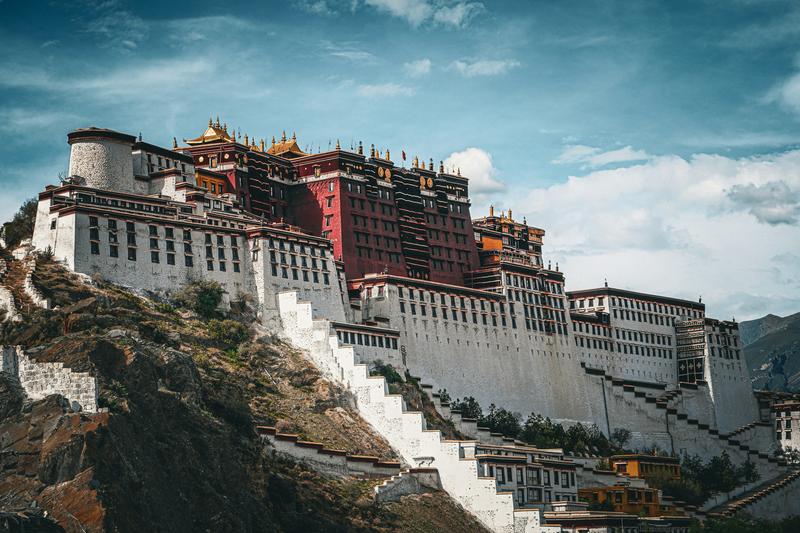
  • Potala Palace at sunrise (布达拉宫) — The 13-story red-and-white palace on Marpo Ri hill, best shot from the square at dawn
  • Jokhang Temple Barkhor Circuit (大昭寺) — Pilgrims prostrating on the wooden planks, prayer flags, and butter lamp glow inside
  • Namtso Lake (纳木错) — Turquoise alpine lake at 4,718m with snow-capped Nyenchen Tanglha mountains, 4 hours from Lhasa
  • Sera Monastery Debate Courtyard (色拉寺) — Monks clapping and stamping during philosophical debates every afternoon at 3 PM
  • Yamdrok Lake (羊卓雍措) — The 'scorpion lake' with impossible turquoise water and surrounding glaciers, 2 hours from Lhasa

🏛️ Intangible Heritage & Craftsmen

  • Tibetan Thangka Painting (唐卡) — Master Ganden at the Mentsekhang preserves the 1,300-year-old tradition of painting Buddhist deities with mineral pigments on cotton, using brushes made from yak tail hair.
  • Tibetan Incense Making (藏香) — Master Nyima Tsering at the Mindroling Monastery hand-rolls incense from 30 herbs including sandalwood, clove, and saffron, following a formula from the 7th-century Tibetan medical text.
  • Tibetan Opera (藏戏) — Performer Pema Tashi continues the 600-year-old 'Ace Lhamo' opera tradition, wearing copper-wire masks and performing epic stories of Tibetan kings and Buddhist saints.

Meet Our Lhasa English Guides

Licensed, verified, and passionate about showing you the best of Lhasa.

G
Expert Guide
📍 Lhasa
Senior Guide Expert English

Licensed, experienced English-speaking guide in Lhasa. Deep knowledge of local history, culture, and attractions. Fluent English with professional guiding certification. Available for half-day, full-day, and multi-day tours.

E
Escort Guide
📍 Lhasa
Intermediate Escort English

Friendly, personable local guide in Lhasa. Basic English with translation app support. Perfect for shopping tours, food walks, and casual city exploration. Great value for budget-conscious travelers.

🎯 Related Lhasa Tour Topics

🏛️

Museums

Historical artifacts & cultural exhibits

🎨

Art Galleries

Contemporary & traditional art

🔬

Science Museums

Interactive exhibits & innovation

🚴

Bike Tours

Scenic cycling routes

🚶

Walking Tours

Hidden alleys & local secrets

🚆 How to Get to Lhasa

Metro, taxi, ride-hailing, train & bus — everything you need to get around Lhasa easily.

🚌

Lhasa City Transport

No metro. Compact city — explore on foot, by bicycle, or by taxi.

Search Bus Routes →
🚕

Lhasa Taxi Fares

Flat rate CNY 10 within central city (Chengguan). CNY 15-30 to outer areas. Very cheap. Cash preferred.

Book via DiDi →
🚗

DiDi Ride-Hailing (滴滴出行)

Available but limited. Hotel reception best for arranging reliable transport.

Download DiDi →
🚄

Lhasa Railway Station

Lhasa Station (拉萨站): Terminates Qinghai-Tibet Railway — world's highest plateau railway. To Beijing (40h), Xining (24h), Chengdu (36h). Station is 20 km from center — taxi CNY 40-60.

Book Train Tickets →
🚌

Lhasa Long-Distance Bus

Lhasa North Suburb Bus Station (拉萨北郊客运站): buses to Shigatse (5h), Nyingchi (10h). Tibet Travel Permit (入藏函) required for foreign nationals.

Search Bus Routes →
🎫

How to Buy Train & Bus Tickets

Train tickets sell out months ahead — book through 12306.cn, Trip.com, or railway bureau. Tibet permit mandatory — obtain through registered Tibet tour operator.

Book on Trip.com →

🌙 Lhasa Nightlife and Late-Night Food

Lhasa nightlife is unique — Potala Palace glows red at night, Tibetan teahouses fill after dark and a small vibrant bar scene caters to travelers.

🏔️

Potala Palace at Night

Most iconic sight in Tibet dramatic at night — palace glows red against dark sky, visible from across the city. Free to view.

🍵

Tibetan Teahouse Evening

Join locals in traditional Tibetan teahouse — butter tea and barley tsampa in warm social atmosphere. Open late.

🍺

Lhasa Bar Street (Tibetan Quarter)

Small street of bars and cafes near Barkhor Street area — popular with travelers and locals. Only bar scene in Tibet.

📿

Barkhor Street Kora at Night

Sacred pilgrimage circuit mystical at night — fewer tourists, Tibetan pilgrims spinning prayer wheels under lamplight.

🍜

Lhasa Night Market Food Stalls

Small food stalls near Tibetan Quarter in evenings — wheat cakes, yak skewers and hot noodles. Simple but delicious.

🌙

Chengdu Speech Cultural Quarter

Lhasa most modern entertainment area — cafes, bars and live music venues popular with young Tibetans.

View Full Nightlife Guide →

🎭 Lhasa Concerts & Shows

Lhasa's performance culture is deeply rooted in Tibetan Buddhism and traditional arts — from monastery debates to folk song evenings. These experiences are unique to the roof of the world.

🙏

Sera Monastery Buddhist Debate Sessions

Every afternoon (usually 3-5pm), monks gather in the Sera monastery courtyard for traditional Buddhist philosophical debates — a theatrical, clapping, gesturing tradition that dates back centuries. Open to visitors as observers.

🎵

Traditional Tibetan Folk Song Evenings

Evening performances of traditional Tibetan folk songs (西藏民歌) in local teahouses and cultural centers — haunting melodies, long songs, and the distinctive Tibetan singing style. Often performed by local families.

🏔️

Potala Palace Morning Chanting

If you arrange permission through your guide or tour operator, early morning chanting sessions in the Potala Palace grounds offer a profound spiritual experience — monks recite sutras as the palace glows in the sunrise.

🎭

Lhasa Traditional Dance Performances

Organized cultural evenings featuring traditional Tibetan dances, costumes, and music. Usually held at the Tibet Theatre or cultural centers. Best arranged through your guide.

📿

Barkhor Street Pilgrimage Chants

The nightly kora (pilgrimage circuit) around Barkhor Street is accompanied by the sounds of monks chanting and prayer wheels spinning — an immersive spiritual experience at any hour.

🎸

Lhasa's Emerging Live Music Scene

A small but growing scene of cafes and bars in the Tibetan Quarter host occasional live music — local Tibetan bands and visiting artists. Ask your guide for current venues.

View Full Shows Guide →

🍵 Lhasa Tea Culture Tour

Lhasa is home to some of China's most fascinating tea traditions - from historic tea houses to famous local varieties and time-honored brewing rituals.

🧈

Tibetan Butter Tea (酥油茶)

Lhasa's signature drink - salty yak butter tea (酥油茶, soy butter cha). Essential at every meal and social gathering. Made by churning tea with yak butter in a traditional cylindrical churn.

🍵

Sweet Tibetan Tea (甜茶, Chamaya)

Mild sweet milk tea (甜茶, dang cha) - a lighter, sweeter version of butter tea. Served in Tibet's famous sweet tea houses in Lhasa. A social drink shared among friends.

🏔️

Tibetan Tea Houses (甜茶馆)

Lhasa's iconic sweet tea houses (甜茶馆) - hundreds of locals gather daily to drink sweet tea from large thermoses. A truly authentic Tibetan cultural experience.

🍵

Yunnan Pu'er for Tibet (藏茶)

Yunnan pu'er tea has been traded to Tibet for centuries via the Tea Horse Road. High-quality aged pu'er from Yunnan is still the preferred tea in Lhasa.

🍵

Barley Tea (青稞茶)

Traditional Tibetan barley tea (青稞茶, qingke cha) - roasted barley grain brewed as a warming tea. A staple in Tibetan homes, especially in winter.

🏯

Potala Palace Tea Service

Traditional tea service at Lhasa's tea houses near the Potala Palace - served with tsampa (roasted barley flour) and local snacks.

View Full Tea Culture Guide →

⚽ Lhasa Major Sports Events

Lhasa hosts major national and international sporting events throughout the year - from world-class marathons to professional tournaments.

🏃

Lhasa Marathon (拉萨马拉松)

High-altitude marathon in the world's highest major city at 3,650m. The half marathon and full marathon courses pass the Potala Palace, Jokhang Temple, and Barkhor Street. A bucket-list event for endurance runners worldwide. Usually held in April.

🏃

Qinghai-Tibet Plateau Marathon

Ultra marathon at extreme altitude on the Qinghai-Tibet Plateau. One of world's highest altitude running events. Attracts elite runners seeking the ultimate high-altitude challenge.

⚽

Tibet Football League Matches

Regional football matches at the Lhasa Sports Stadium. China League Two level football featuring teams from across the Tibet Autonomous Region. Season runs May to October at altitude.

🏔️

Mount Everest Base Camp Trek & Run

While not in Lhasa itself - tours depart Lhasa for Everest Base Camp running events at 5,200m altitude. The ultimate high-altitude running experience near the world's highest peak.

🏃

Barkhor Street Walking Challenge

Non-competitive walking event around the sacred Barkhor Street kora circuit. Participants join local pilgrims in this 2km circuit around Jokhang Temple. Cultural event celebrating Tibetan Buddhist tradition.

⛷️

Qamdo Skiing and Winter Sports

Ski resorts in the Qamdo area of Tibet (accessible from Lhasa) offer skiing and winter sports at altitude. New ski resort development in eastern Tibet.

View Full Sports Guide →

✨ Travel Essentials for Lhasa

🚗

Airport Transfer & Car Service

Local drivers for airport pickup, attraction transfers & private car charter. Safe, reliable, English-speaking support.

Book on ChinaWheely →
📶

Pocket WiFi for China

Unlimited 5G pocket WiFi delivered to your hotel. No Chinese ID needed. Full Google, WhatsApp & Instagram access.

Pre-Order WiFi →
🏥

Medical & Wellness

Health checkups, dental cleaning & more. Much cheaper than in US/Europe. Add a wellness stop to your trip.

Learn More →

🐉 Chinese Zodiac in Lhasa

The Chinese zodiac (十二生肖) features 12 animals — Rat, Ox, Tiger, Rabbit, Dragon, Snake, Horse, Goat, Monkey, Rooster, Dog, Pig. Each sign's personality shapes the ideal travel style for Lhasa. Find your zodiac sign for personalized Lhasa travel recommendations!

🐀

🐀 Rat (鼠) — Clever & Curious

Personality: Quick-witted, adaptable, loves food & comfort. Prefers flexible itineraries with great value.

→ Lhasa Best: Short scenic drives, foodie walks, beach relaxation

🐂

🐂 Ox (牛) — Steady & Patient

Personality: Reliable, loves planning ahead, enjoys nature at a slow, steady pace.

→ Lhasa Best: Eco-resorts, hiking trails, countryside B&Bs

🐅

🐅 Tiger (虎) — Brave & Adventurous

Personality: Bold, loves challenges and extremes. Thrives on high-energy, pioneering experiences.

→ Lhasa Best: Mountain hiking, kayaking, off-road adventures

🐇

🐇 Rabbit (兔) — Gentle & Comfort-Seeking

Personality: Kind, values comfort and serenity. Prefers slow travel away from crowds.

→ Lhasa Best: Hot spring resorts, countryside retreats, lakeside calm

🐉

🐉 Dragon (龙) — Confident & Ambitious

Personality: Charismatic, loves luxury and landmark destinations. Aims high in everything.

→ Lhasa Best: Luxury hotels, premium shopping, iconic landmarks

🐍

🐍 Snake (蛇) — Thoughtful & Observant

Personality: Deep, detail-oriented, loves art, culture and quiet observation of beauty.

→ Lhasa Best: Art museums, ancient towns, photography tours

🐴

🐴 Horse (马) — Free-Spirited & Social

Personality: Energetic, loves freedom and spontaneous plans. Enjoys meeting locals along the way.

→ Lhasa Best: Spontaneous road trips, cycling, hiking, music festivals

🐐

🐐 Goat (羊) — Peaceful & Artistic

Personality: Calm, loves natural beauty and tranquility. Enjoys art, folk traditions and quiet reflection.

→ Lhasa Best: Scenic mountains & lakes, cultural immersion, meditation

🐒

🐒 Monkey (猴) — Clever & Curious

Personality: Playful, loves novelty and interactive experiences. Tends to get distracted though!

→ Lhasa Best: Interactive museums, VR zones, wildlife parks

🐓

🐓 Rooster (鸡) — Detail-Oriented & Precise

Personality: Perfectionist, loves structure and efficiency. Expects five-star service and top logistics.

→ Lhasa Best: Luxury定制 tours, tight schedules, photography routes

🐕

🐕 Dog (狗) — Loyal & Nature-Loving

Personality: Devoted, trustworthy, thrives outdoors. Loves group travel with close friends.

→ Lhasa Best: Long hikes, camping, volunteer tourism, nature walks

🐖

🐖 Pig (猪) — Easygoing & Pleasure-Seeking

Personality: Laid-back, loves good food and comfort. Enjoys sharing moments with others.

→ Lhasa Best: Food tours, night markets, resort relaxation, beach slow living

View Full Zodiac Travel Guide for Lhasa →

Lhasa Tour Guide FAQ

Common questions about hiring an English guide in Lhasa.

How much is a private tour guide in Lhasa per day?

Lhasa English private tour guides from VIPChinaGuide start from ¥585 ($80 USD) for 3 hours with an Escort Guide, and ¥878 ($120 USD) for an Expert Guide. Full-day tours (8 hours) range from ¥1,167 to ¥1,716. Prices include the guide's service only; entrance tickets and meals are separate.

Can I book an English guide for Lhasa before arriving in China?

Yes, you can book an English-speaking guide for Lhasa online before arriving in China. VIPChinaGuide accepts bookings online with secure payment. We recommend booking at least 3-7 days in advance, and 2-4 weeks ahead for peak seasons. Contact us on WhatsApp at +86 155 2777 1775 for last-minute requests.

What is the best time to visit Lhasa with a guide?

The best time to visit Lhasa depends on your preferences. Spring (March-May) and autumn (September-November) generally offer the most pleasant weather across most of China. Summer can be hot but is great for festivals and outdoor activities. Winter offers fewer crowds and lower prices. Your guide can help you plan the perfect itinerary based on the season.

Do I need a guide for Lhasa, or can I explore alone?

While you can explore Lhasa independently, a local English-speaking guide adds immense value: they handle Chinese-only signage and menus, help you avoid tourist traps, provide historical and cultural context, know the best photo spots and local restaurants, and can assist with transportation and bargaining. A guide transforms sightseeing into an immersive cultural experience.

How far in advance should I book a Lhasa guide?

We recommend booking at least 3-7 days in advance for Lhasa. For peak seasons (Chinese New Year, Golden Week, summer holidays), book 2-4 weeks ahead. Our top expert guides are often booked well in advance. For last-minute requests, contact us on WhatsApp at +86 155 2777 1775 and we will do our best to accommodate.

Related Theme Pages

Ready to Explore Lhasa?

Book your licensed English-speaking private guide today. Experience Lhasa like never before with a local expert.

Book Your Lhasa Guide Now

Detailed Lhasa Tour Routes

Every route includes in-depth cultural and historical explanations from your private English-speaking guide

Lhasa Potala Palace & Jokhang Temple

Most Popular 1 Day

Stand before the world's highest palace at 3,700 meters, then join Tibetan pilgrims circling Tibet's most sacred temple in a ritual performed continuously for 1,300 years.

Potala Palace

A 13-story fortress-palace rising 170 meters above Lhasa, built in 1645 by the Fifth Dalai Lama on the site of a 7th-century palace. The palace contains 1,000 rooms, 10,000 shrines, and 200,000 statues. Your guide explains the Red Palace's eight golden stupas containing remains of Dalai Lamas, the intricate thangka paintings using crushed gemstones as pigments, and the strict visitor limit of 2,300 per day designed to protect the 1,300-year-old wooden structure.

Jokhang Temple

The spiritual heart of Tibet, built in 652 AD to house the Jowo Shakyamuni statue — a life-sized golden Buddha considered the most sacred object in Tibet, brought by Princess Wencheng from Chang'an. Your guide joins you in the Barkhor pilgrimage circuit where devotees prostrate themselves every three steps, explains the 1,300-year history of the temple's continuous operation, and points out the Ming Dynasty inscriptions on golden roofs donated by Chinese emperors.

Barkhor Street

A 1-kilometer circular pilgrimage route surrounding Jokhang Temple that has been walked clockwise by Tibetan Buddhists for 13 centuries. Your guide navigates you through the maze of stalls selling yak butter, prayer wheels, turquoise jewelry, and hand-woven Tibetan carpets, explains the significance of prayer flags' five colors representing the elements, and shares stories of pilgrims who travel 2,000 kilometers on foot to reach this sacred circuit.

Travel Planning Guide for Lhasa

Everything you need to plan your Lhasa trip — visas, best time to visit, transport tips, and budget advice — all in one place.

Book a Lhasa Guide →