Your Ultimate Beijing Travel Guide — Licensed English Guides for Forbidden City, Great Wall, Temple of Heaven & More
16,411 km²
21.9 million
Beijing (北京) literally means "Northern Capital". It has served as the capital of multiple dynasties and is the political, cultural, and educational center of modern China.
7.2/10 — Residents enjoy world-class cultural amenities, extensive parks, and modern infrastructure.
Airport: Beijing Capital (PEK) — 3 terminals, 30 min to city by Airport Express (¥25). Beijing Daxing (PKX) — 1 terminal, 46 min by Daxing Airport Express (¥35). Train Stations: Beijing South (high-speed rail hub, 20 min to Tiananmen), Beijing West (to Xian/Lhasa, 35 min), Beijing Railway Station (city center, walkable to Wangfujing), Beijing North (suburban trains to Great Wall).
Peking University, Tsinghua University, Renmin University
Yan Mountains, Taihang Mountains, Miyun Reservoir, Fragrant Hills, Summer Palace gardens, and extensive urban greenways.
Plan your perfect Beijing trip with our seasonal guide — weather, events, and travel tips for every time of year.
Autumn (September–November) — the best season to travel to Beijing
Shoulder season: April–May or September–October for best prices and weather
Mar–May: 🌸 Spring | Jun–Aug: ☀️ Summer | Sep–Nov: 🍂 Autumn | Dec–Feb: ❄️ Winter
Explore the best of China's capital with a knowledgeable local expert who speaks fluent English.
Licensed, verified, and passionate about Beijing's history and culture.
PhD in Ming Dynasty History from Peking University. 12 years of guiding experience at the Forbidden City and Great Wall. Fluent English with a British accent. Specializes in bringing ancient history to life with fascinating stories.
Beijing local with 5 years experience. Fun, energetic personality perfect for shopping tours and hutong walks. Great at finding hidden cafes and street food. Uses translation app for complex topics but always gets the message across.
Metro, taxi, ride-hailing, train & bus — everything you need to get around Beijing easily.
Beijing has 27 metro lines — world's largest metro network. Buy a rechargeable Yikatong card (CNY 20+ deposit) at any station. Official app: 北京地铁. Mobile payment via WeChat/Alipay at all gates. Metro runs 5am-midnight.
Beijing Metro Map →Starts CNY 13 for 3 km, CNY 2.3/km thereafter. Surcharge CNY 1/km above 15 km. No peak surcharge. Always insist on metered ride (打表). Alipay & WeChat accepted.
Book via DiDi →English interface available. Use DiDi Express (budget) or DiDi Premier (sedan). Download the app before arriving in China.
Download DiDi →Beijing Railway Station (北京站) — north-south classics. Beijing West (北京西) — HSR to Xi'an, Guangzhou, Southwest. Beijing South (北京南) — G/D trains to Shanghai, Nanjing, Tianjin, Qingdao. Beijing Fengtai (北京丰台) — newly renovated hub.
Book Train Tickets →Buses from Sihui (四惠), Liangmaqiao (亮马桥), Lama Temple (雍和宫) gates. For most destinations high-speed rail is faster and more comfortable.
Search Bus Routes →Book HSR 15 days ahead at 12306.cn (English available). Foreign cards: Trip.com or Trainpal. Long-distance bus: 携程 or at station.
Book on Trip.com →Beijing transforms at night — from imperial palace glow to neon-lit hutong bars. Here's where locals eat, drink, and play after dark.
Beijing hosts the finest performing arts in China — from the National Centre for the Performing Arts to intimate hutong jazz bars. Here's where to experience world-class performances.
Beijing is home to some of China's most fascinating tea traditions - from historic tea houses to famous local varieties and time-honored brewing rituals.
Beijing hosts major national and international sporting events throughout the year - from world-class marathons to professional tournaments.
Local drivers for airport pickup, attraction transfers & private car charter. Safe, reliable, English-speaking support.
Book on ChinaWheely →Unlimited 5G pocket WiFi delivered to your hotel. No Chinese ID needed. Full Google, WhatsApp & Instagram access.
Pre-Order WiFi →Health checkups, dental cleaning & more. Much cheaper than in US/Europe. Add a wellness stop to your trip.
Learn More →The Chinese zodiac (十二生肖) features 12 animals — Rat, Ox, Tiger, Rabbit, Dragon, Snake, Horse, Goat, Monkey, Rooster, Dog, Pig. Each sign's personality shapes the ideal travel style for Beijing. Find your zodiac sign for personalized Beijing travel recommendations!
Common questions about hiring an English guide in Beijing.
Yes, VIPChinaGuide provides licensed English-speaking guides specifically for Beijing's Forbidden City. Our Expert Guide David Zhang holds a PhD in Ming Dynasty History from Peking University and has 12 years of experience guiding at the Forbidden City. Book in advance for guaranteed availability.
Beijing English private tour guides from VIPChinaGuide start from ¥585 ($80 USD) for 3 hours with an Escort Guide, and ¥878 ($120 USD) for an Expert Guide. Full-day tours (8 hours) range from ¥1,167 to ¥1,716. Prices include the guide's service only; entrance tickets and meals are separate.
The must-see attractions in Beijing with an English guide include: the Forbidden City (imperial palace), the Great Wall (Mutianyu or Badaling section), Temple of Heaven, Summer Palace, Hutongs (traditional alleys), and the 798 Art District. An expert guide brings 600 years of history to life with fascinating stories.
While you can visit the Great Wall independently, a guide adds immense value: they know the best sections to avoid crowds, explain the wall's 2,000-year history and construction techniques, help with transportation logistics, and can suggest the best photo spots. They also handle Chinese-only signage and ticket purchases.
We recommend booking at least 3-7 days in advance for Beijing. For peak seasons (April-May, October, Chinese New Year, Golden Week), book 2-4 weeks ahead. Our top guides like David Zhang are often booked weeks in advance, especially for the Forbidden City.
Book your licensed English-speaking private guide today. From the Forbidden City to the Great Wall, experience Beijing like never before.
Book Your Beijing Guide NowEvery route includes in-depth cultural and historical explanations from your private English-speaking guide
Walk through 600 years of imperial history at the world's largest palace complex, then hike the Great Wall at its most dramatic mountain setting.
The world's largest ancient wooden palace complex, spanning 720,000 square meters with 9,999 rooms. Built between 1406-1420, it served as the imperial palace for 24 emperors across Ming and Qing dynasties. Walk through the Meridian Gate, Hall of Supreme Harmony with its dragon throne, and the Imperial Garden with 400-year-old cypress trees. Your guide explains Feng Shui principles, the symbolism of yellow glazed tiles reserved exclusively for imperial buildings, and the secret lives of emperors who ruled from these halls.
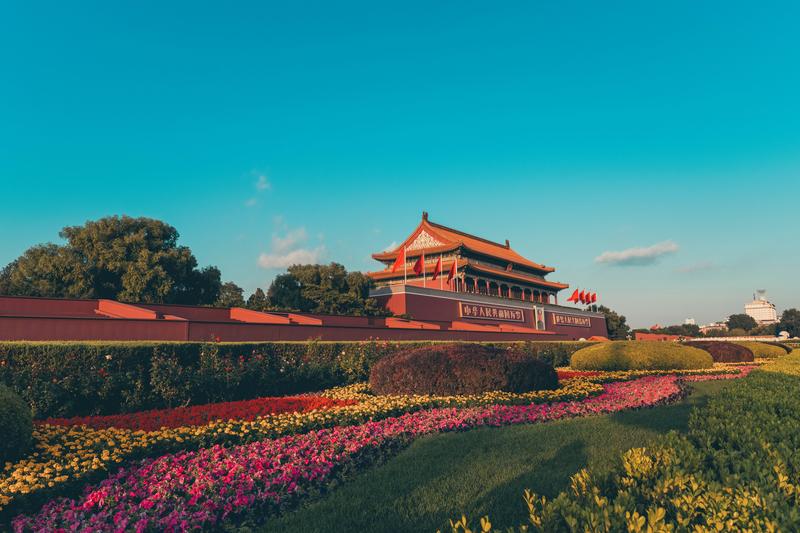
The world's largest city square at 440,000 square meters, capable of holding one million people. Your guide walks you through its layered history — from the Ming Dynasty's Gate of Heavenly Peace built in 1420, to the 1949 founding ceremony of the People's Republic where Mao Zedong proclaimed 'The Chinese people have stood up,' to its role as the symbolic heart of modern China.
One of the most scenic and best-preserved sections of the Great Wall, stretching 2,250 meters along mountain ridges covered in forest. Built in 1368 during the Ming Dynasty, it features 23 watchtowers connected by steep stone staircases. Your guide explains the wall's military beacon fire communication system — smoke by day and fire by night could transmit news of invasion across 5,000 kilometers in just hours — and the legendary stories of the million workers who built it over 2,000 years.
Explore the living heart of old Beijing through narrow alleyways, courtyard homes, and centuries-old temples where locals still practice traditional customs unchanged for generations.
A 786-year-old hutong dating to the Yuan Dynasty, stretching 786 meters with 16 sub-lanes. Your guide takes you through grey-brick courtyard houses (siheyuan), explains the social hierarchy encoded in gate decoration — officials had taller thresholds than merchants — visits local families whose families have lived here for six generations, and shows hidden teahouses where Beijing opera singers still practice daily.
A masterpiece of Ming architecture built in 1420 where emperors performed annual ceremonies praying for good harvests. The circular Hall of Prayer for Good Harvests stands on a three-tiered marble terrace built without a single nail, its blue roof symbolizing heaven. Your guide demonstrates the Echo Wall where whispers travel clearly along a 65-meter curve, and explains the cosmic symbolism of the circular temple within a square outer wall representing 'heaven is round, earth is square.'
The largest Tibetan Buddhist temple outside Tibet, converted from an imperial palace in 1744. It houses an 18-meter tall sandalwood Buddha statue carved from a single Tibetan sandalwood tree — certified by Guinness World Records. Your guide explains Tibetan Buddhist rituals, the clockwise rotation of prayer wheels which sends prayers to heaven with each turn, and how this temple uniquely bridges Han Chinese and Tibetan Buddhist cultures under one roof.
Witness China's contemporary face through cutting-edge architecture, Olympic venues, and vibrant art districts that blend industrial heritage with creative energy.
The iconic 91,000-seat stadium designed by architects Herzog and de Meuron for the 2008 Olympics. Its steel lattice structure weighs 42,000 tons and required 36 kilometers of concealed welding with no two beams identical. Your guide explains the architectural symbolism of a 'nest' nurturing future generations, and how Chinese engineers solved the challenge of building an earthquake-resistant structure on Beijing's fault line.
A sprawling 600,000-square-meter former electronics factory complex transformed into China's most important contemporary art zone. Soviet-built Bauhaus factories now house over 400 galleries. Your guide navigates you through cutting-edge installations, street art by anonymous political artists, and explains how this district became the epicenter of China's underground art movement after artists first squatted here in 1995.
The 234-meter headquarters nicknamed 'Big Pants' — a gravity-defying loop structure where two towers lean at 6 degrees and connect 162 meters in the air via a cantilevered bridge. Your guide explains architect Rem Koolhaas's vision of 'anti-icon' architecture and the structural engineering breakthroughs that made this impossible-looking building withstand Beijing's earthquakes and typhoon winds.
Everything you need to plan your Beijing trip — visas, best time to visit, transport tips, and budget advice — all in one place.
Book a Beijing Guide →